

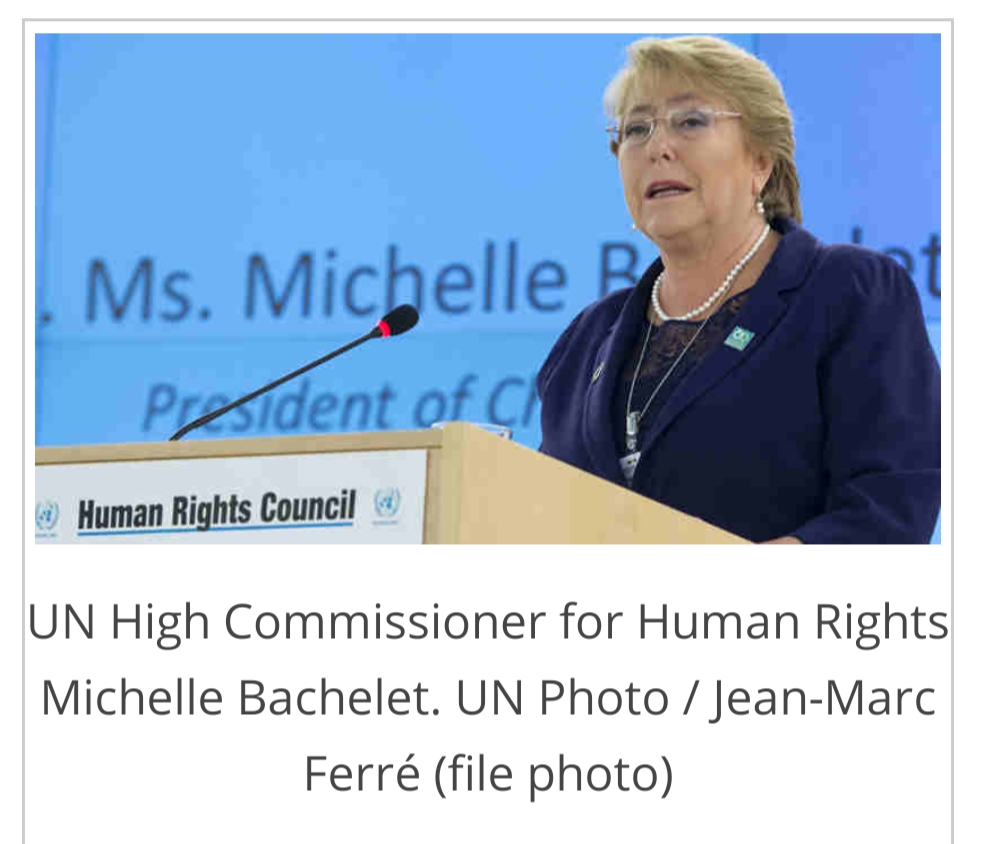
Bachelet said the Covid-19 pandemic had seen a further tightening of censorship in several countries,
The UN Human Rights Office has identified a dozen Asia-Pacific (A-P) countries that are depriving people of their right to express during the ongoing Covid crisis. The countries are Bangladesh, Cambodia, China, India, Indonesia, Malaysia, Myanmar, Nepal, the Philippines, Sri Lanka, Thailand, and Viet Nam.
The UN High Commissioner for Human Rights Michelle Bachelet on June 3 expressed alarm at the clampdown on freedom of expression in parts of the Asia-Pacific during the Covid-19 crisis, saying any actions taken to stop the spread of false information must be proportionate.
Many countries in the region already have laws governing alleged “fake news” and online media that raise human rights concerns and have been used in other contexts to deter legitimate speech, especially public debate, criticism of government policy, and suppress freedom of expression.
Measures should adhere to the principles of legality, necessity, proportionality, serve a legitimate public health objective and should be the “least intrusive” approach required to achieve that result.
Bachelet said the Covid-19 pandemic had seen a further tightening of censorship in several countries, along with the arbitrary arrest and detention of people critical of their Government’s response or for simply sharing information or views about the pandemic.
Arrests for expressing discontent or allegedly spreading false information through the press and social media, have been reported in these identified countries.
The High Commissioner recognized the need to restrict harmful misinformation or disinformation to protect public health, or any incitement of hatred towards minority groups, but said this should not result in purposeful or unintentional censorship, which undermines trust.
