

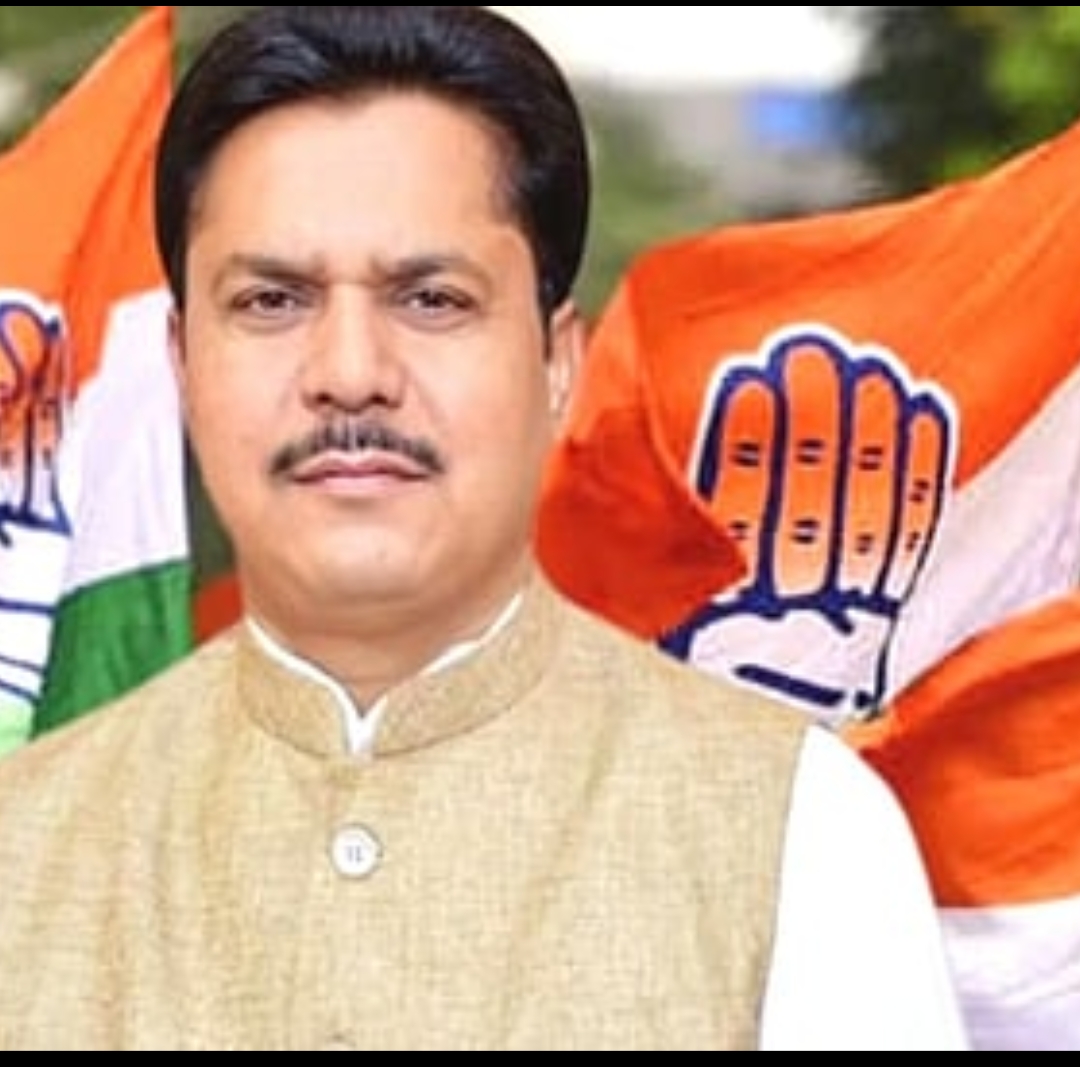
The recent political developments in Assam have once again foregrounded the perennial questions of ideological commitment, party loyalty and the ethics of political realignment. The trajectory of Bhupen Bora, former president of the Assam Pradesh Congress Committee (APCC), and his subsequent political choices have triggered intense debate within the Congress ecosystem and beyond.
During his tenure as APCC chief, Bora was widely perceived as one of the most vocal and combative critics of Chief Minister Himanta Biswa Sarma. His rhetoric against the BJP government in Assam was sharp, often personal, and unrelenting. Bora positioned himself as a frontline adversary of the ruling establishment, attempting to energise the Congress rank and file through aggressive political confrontation.
Yet, despite the combative posture, the organisational and electoral outcomes under his leadership were underwhelming. The Congress in Assam struggled to consolidate its base, expand its organisational footprint, or significantly improve its electoral performance. Internal discontent reportedly simmered over the party’s inability to build a coherent statewide strategy capable of challenging the BJP’s well-oiled electoral machinery.
Against this backdrop, the Congress high command opted for a leadership change, appointing Gaurav Gogoi as the new state president. The move was seen by many as an attempt to recalibrate the party’s strategy, inject fresh energy, and project a more measured yet assertive opposition. Gogoi’s political style contrasts with Bora’s. While not soft on criticism of the government, Gogoi has generally adopted a less vitriolic and more issue-based approach in his engagement with the ruling dispensation.
Leadership transitions are an intrinsic part of democratic party functioning. However, how leaders respond to such transitions often reveals as much about their political temperament as their tenure in office. Reports and political chatter suggested that Bora felt sidelined following his removal. Such sentiments, though humanly understandable, raise an important question: does personal disappointment justify a dramatic shift in political allegiance?
The optics of Bora’s move to align with the very party he had fiercely opposed are striking. Political crossovers are not new in Indian politics; ideological boundaries have frequently proven porous. However, the speed and cheerfulness with which former adversaries embrace each other often fuel public cynicism. The spectacle of a leader once sharply critical of Himanta Biswa Sarma now being warmly received by him underscores the transactional nature of contemporary politics.
For observers, this episode exemplifies what many term political opportunism — where ideological consistency takes a back seat to personal positioning. When sharp critiques are followed by sudden realignments without any convincing explanation of changed convictions, the credibility of public discourse suffers. Voters are left wondering whether past criticisms were matters of principle or mere political theatre.
From the Congress’s perspective, Bora’s departure can be framed as a moment of organisational clarity. Political parties, especially those in opposition, often struggle with internal factionalism and leadership rivalries. A leadership change inevitably tests party discipline. In such circumstances, leaders who choose to remain and contribute within the party structure are generally viewed as demonstrating commitment to collective goals over personal ambition.
On the other hand, those who depart — particularly to join ideological adversaries — risk being perceived as prioritising individual prospects over organisational loyalty. In a polity increasingly shaped by personality-driven politics, such moves reinforce the impression that ideological lines are negotiable.
The broader question this episode raises is about the health of party-based politics in India. Political parties function not merely as electoral vehicles but as platforms built on shared principles, policy positions and long-term visions. When prominent leaders shift camps abruptly, it weakens the moral authority of ideological debates and deepens voter scepticism about the authenticity of political contestation.
For Gaurav Gogoi, the challenge now lies in consolidating the Congress organisation in Assam and translating leadership change into tangible political revival. Whether he can build a cohesive structure capable of mounting a serious challenge to the BJP remains to be seen. But leadership transitions also present opportunities — to rebuild trust, foster unity and project stability.
Ultimately, the electorate is the final arbiter. Political careers shaped by dramatic realignments are judged not merely by immediate applause but by long-term credibility. In the churn of Assam’s politics, this episode serves as a reminder that while party posts may change, the test of integrity remains constant.
