

On the occassion of t Environment Day
As the world observes World Environment Day on June 5, Assam has reason to celebrate its rich natural heritage. Yet, just a few kilometres from Guwahati, the fragile landscape surrounding Pobitora Wildlife Sanctuary is facing an ecological crisis that deserves urgent attention.
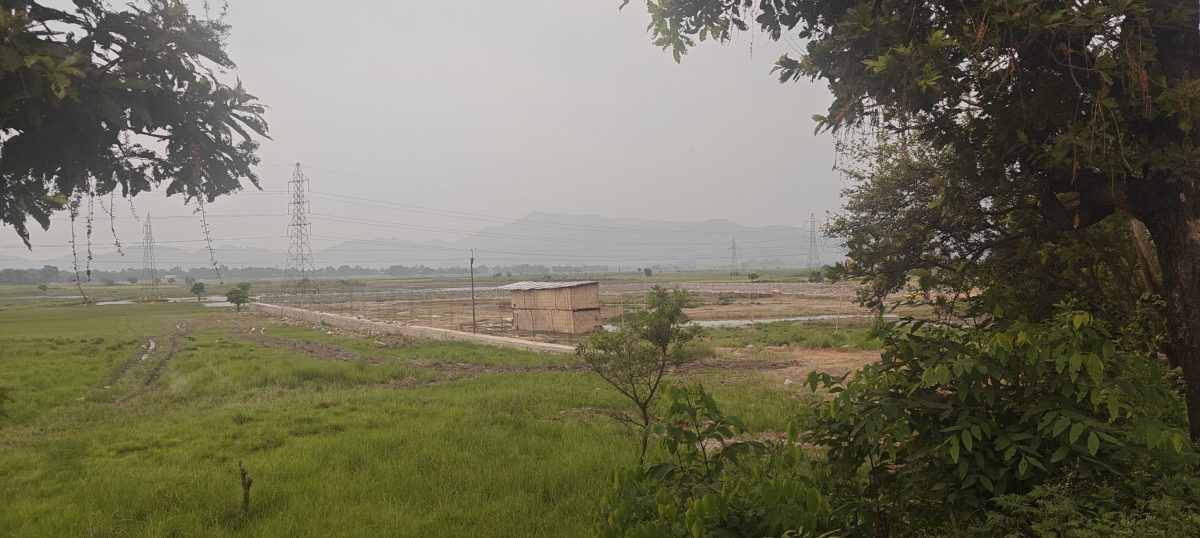
The green hills and wetlands that define the Pobitora–Mayong landscape are increasingly being altered by unplanned real-estate development. In recent years, growing demand for land from affluent buyers has led to the filling up of wetlands, often using earth excavated from nearby hills. This process is doubly destructive: first the hills are cut and flattened, and then the wetlands are buried. The result is a dangerous disruption of a natural system that has evolved over centuries.
The ecological importance of the Pobitora-Mayong landscape cannot be overstated. Spread over just 38.8 square kilometres, Pobitora supports 107 one-horned rhinoceroses, giving it one of the highest rhino densities in the world. The sanctuary’s wetlands and grasslands also sustain more than 2,000 migratory birds. Conservation efforts have helped the rhino population grow from 74 in 1999 to over 100 today. Yet this success rests on a fragile ecological foundation. The destruction of wetlands and hill ecosystems around the sanctuary threatens not only wildlife habitats but also natural flood-control mechanisms. Globally, wetlands have declined by 22 per cent since 1970, with more than 411 million hectares already lost. Scientists warn that continued wetland degradation increases flood vulnerability, reduces groundwater recharge and accelerates biodiversity loss. What is happening around Pobitora therefore is not merely a local land-use issue but a challenge to Assam’s environmental security.
The Rajamayong hills and the surrounding wetlands perform complementary ecological functions. The hills act as natural watersheds, regulating runoff during the monsoon and preventing excessive soil erosion. Wetlands, on the other hand, function as giant sponges, absorbing rainwater, recharging groundwater and moderating floods. They also provide breeding grounds for fish, feeding habitats for migratory birds and water sources for wildlife.
When hills are cut indiscriminately, large quantities of loose soil are generated. Much of this soil eventually finds its way into nearby wetlands, either through deliberate dumping or erosion. Wetlands lose depth, water-holding capacity and biological productivity. The destruction is often gradual and therefore escapes public scrutiny until the damage becomes irreversible.
Environmental experts have repeatedly warned that the disappearance of wetlands can increase the frequency and severity of floods. Wetlands naturally store excess rainwater and release it slowly. Once filled up, storm water has nowhere to go, resulting in flash floods and waterlogging. The experience of Guwahati, where shrinking wetlands have been linked to worsening urban floods, serves as a cautionary tale.
The consequences extend far beyond flooding. Wetland destruction leads to the loss of fish populations, aquatic plants and insects that form the base of the food chain. Water birds lose feeding and nesting grounds. Pobitora’s wetlands attract thousands of migratory birds every year, and any reduction in wetland area directly threatens this biodiversity.
The cutting of hills also increases the risk of landslides and soil erosion. Vegetation on hill slopes binds the soil together and regulates water flow. Removing this natural cover destabilises slopes and causes sediment to wash into rivers, beels and wetlands during heavy rains. This not only degrades ecosystems but also affects agricultural land and human settlements downstream.
The environmental cost of such activities is often underestimated because the benefits of wetlands are largely invisible. Healthy wetlands purify water, recharge aquifers, store carbon, moderate temperatures and support livelihoods. The Ministry of Environment, Forest and Climate Change has repeatedly emphasised that wetlands are “prized lands, not wastelands” and that their encroachment undermines both ecological security and human well-being.
The growing pressure on land around Pobitora is particularly worrying because the sanctuary is already facing multiple challenges, including habitat fragmentation and encroachment. Environmental concerns have previously prompted investigations into activities affecting the sanctuary’s ecological integrity.
Although no comprehensive satellite-based assessment has yet been published for the Pobitora-Mayong landscape, studies from Morigaon district and other wetlands of Assam provide a disturbing warning. A satellite-based land-use study of Morigaon district found rapid conversion of natural landscapes into settlements and other human uses. Elsewhere in Assam, remote-sensing analyses show that Morikolong Beel in Morigaon lost nearly 28 per cent of its area between 1987 and 2014, while Deepor Beel suffered an even more dramatic decline. These studies demonstrate a common pattern: when wetlands are encroached upon and filled with earth obtained from nearby hills, water bodies shrink, biodiversity declines and flood vulnerability increases. The ongoing hill-cutting and wetland-filling reported around Mayong therefore risk repeating the environmental mistakes already witnessed elsewhere in Assam.
If the hills surrounding Mayong continue to be cut and the wetlands continue to be filled, the consequences will not be confined to the loss of scenic beauty. Scientific evidence from across Assam shows that such land-use changes reduce water-holding capacity, increase flood risk, destroy wildlife habitat and weaken ecological resilience. Pobitora today shelters 107 one-horned rhinoceroses and thousands of migratory birds. Protecting the sanctuary therefore requires protecting not only the notified forest area but also the surrounding hills, wetlands and natural drainage systems that sustain it. World Environment Day should be a reminder that development cannot come at the cost of dismantling the very ecosystems that protect both people and wildlife.
World Environment Day should therefore be an occasion not merely for symbolic tree planting but for serious reflection on the future of landscapes such as Mayong and Pobitora. Authorities must strictly enforce laws governing hill cutting and wetland conservation. Wetlands around the sanctuary should be scientifically mapped and legally protected from conversion. Environmental impact assessments must be mandatory for large-scale land development projects in ecologically sensitive areas.
Citizens, too, have a responsibility. Every filled-up wetland and every flattened hill may appear to be a sign of “development” today, but tomorrow they could become the reason for floods, water scarcity, biodiversity loss and ecological instability.
Nature’s systems are interconnected. Destroying hills to fill wetlands is not merely altering the landscape; it is dismantling the ecological foundations on which both wildlife and human communities depend. The question before Assam this World Environment Day is simple: will we protect these natural assets while there is still time, or will we realise their value only after they have disappeared?
